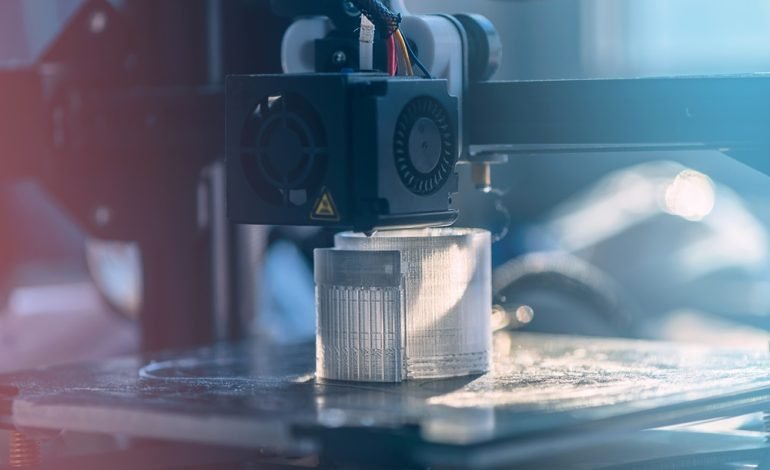
For a business exploring in-house 3D printing, the first question is usually what a machine costs. The more important question is what it costs to own and operate one. The true budget includes acquisition, consumables, upkeep, electricity, software, finishing, and occasional surprises. Understanding these pieces helps you judge whether the technology fits your workflow and production volume.
Purchase price depends on printer class, build volume, material compatibility, speed, precision, and expected duty cycle. Entry-level units often cost between $200 and $1,000, making them suitable for beginners, hobbyists, small prototypes, and personal projects. Midrange systems, roughly $1,000 to $10,000, offer greater reliability, larger build areas, and better print quality for businesses or serious users doing small-scale production. Industrial machines begin around $10,000 and can exceed $100,000, delivering high speed, advanced materials, and precision for aerospace, automotive, manufacturing, and other heavy-duty applications. A higher upfront price can still be justified when the printer reduces tooling costs or shortens production timelines.
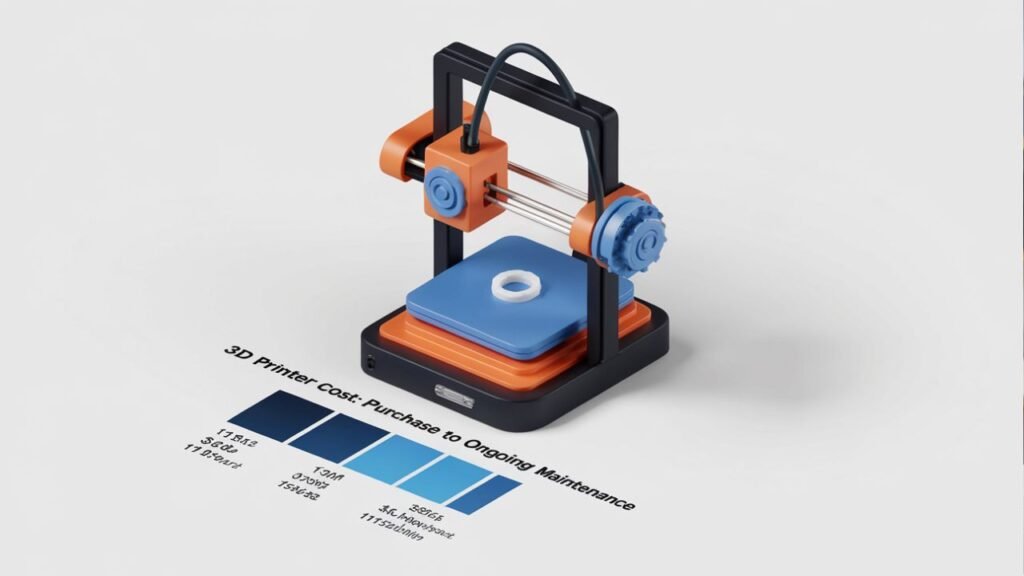
Material expenses depend on the printing method and the job itself. Filaments and resins vary widely in price based on type, quality, and quantity needed. A small simple part may cost only a few dollars, while larger or specialty prints can add up quickly. Common materials such as PLA are usually affordable, while nylon, engineering resins, and other advanced options cost more. Instead of estimating only one print, budget for the materials you expect to use regularly.
Operating costs include electricity. Many 3D printers draw about 50 to 250 watts, while larger industrial models consume more, especially during long production runs. Replacement nozzles, build plates, filters, lubricants, and cleaning supplies also contribute. These expenses may seem minor individually, but they become significant when the printer runs frequently or multiple machines operate at once.
Maintenance is essential for consistent print quality and avoiding downtime. Common tasks include cleaning rails, checking belts, clearing jams, replacing worn nozzles, and calibrating axes. Depending on usage and machine complexity, maintenance can cost $50 to several hundred dollars per year. Regular care helps prevent breakdowns, but it remains a cost that belongs in the total budget.
Post-processing is another consideration. Many printed parts need support removal, sanding, polishing, painting, curing, or chemical finishing before they are ready to use. These costs are easy to overlook, yet detailed or cosmetic parts may require tools, labor, and specialized supplies.
Software also affects the overall investment. Some printers include design or slicing software, while others require third-party programs. Options range from free tools to professional-grade software sold as one-time purchases or ongoing subscriptions. Consumables such as adhesives, cleaning agents, gloves, storage containers, and replacement accessories add smaller recurring costs that can accumulate over time.
Hidden costs may include training, spare parts inventory, ventilation, dedicated workspace, shipping, failed prints, and disposal. These are not always obvious, but they matter when planning for long-term 3D printing. One useful benchmark: in some cases, 3D printing can reduce manufacturing costs by up to 90% through less material waste and the ability to create parts on demand.
To lower costs, choose a printer that works with affordable materials or uses less energy. Optimize designs to reduce material usage, nest multiple parts into one build, maintain equipment consistently, and purchase materials in sensible quantities. These strategies help you get more value from a sustainable 3D printing investment.
In the end, 3D printing can be worth the cost when your business regularly needs custom parts, prototypes, or low-volume production. It can reduce inventory needs, speed up prototyping, and cut waste. If you print only occasionally or do not need customization or high precision, traditional manufacturing may still be the better choice. As technology improves, printer and material prices are likely to fall, while new materials and methods will make the process more efficient and accessible.
Frequently asked questions:
What factors affect the cost of a 3D printer? The main factors are printer type, features, build size, material compatibility, speed, and precision. Entry-level models are cheaper, while industrial systems carry more advanced capabilities and higher prices.
How much do 3D printing materials cost? Filaments and resins commonly range from about $20 to $200 per kilogram or liter, depending on type and quality. PLA is generally affordable, while nylon and specialty resins cost more.
How much energy does a 3D printer use? Many printers use between 50 and 250 watts. Larger industrial machines can consume more power, particularly during long printing runs.
Is 3D printing more cost-effective than traditional manufacturing? For small runs and custom parts, 3D printing can be cheaper because it avoids expensive molds and tooling. For large-scale production, traditional methods may still be more economical.