A thin metal sheet can be divided into two finished components without any blade touching it. The tool responsible is a laser: a tightly focused light beam that cuts with remarkable accuracy. This technology has moved far beyond specialty workshops. Today it supports automotive production, electronics assembly, medical device fabrication, and many other sectors where speed, repeatability, and clean edges are essential.
How Laser Cutting Works
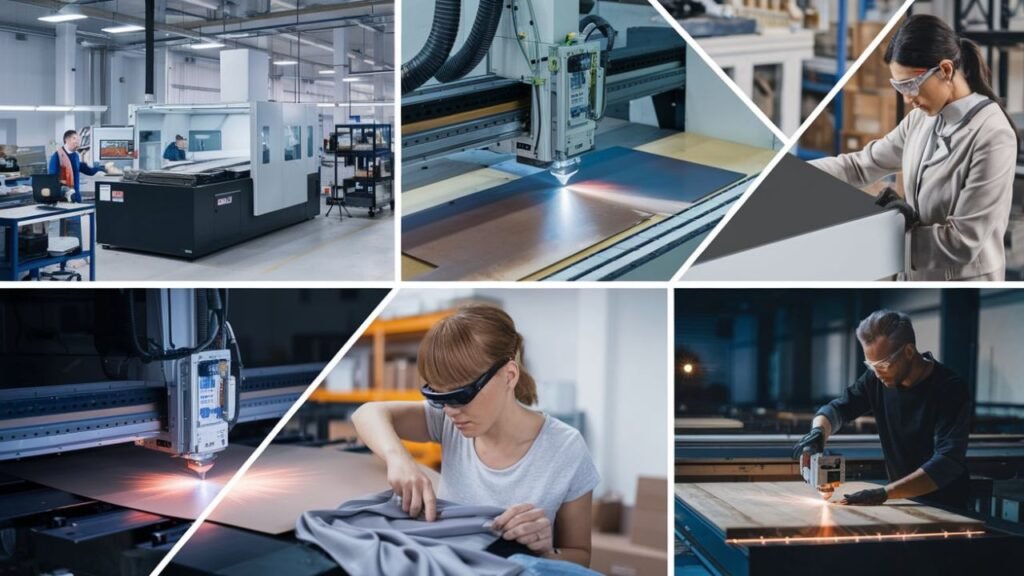
At the heart of the process is a high-powered laser beam guided by computer numerical control. The beam is focused onto a small area, raising the material’s temperature until it melts, burns, or vaporizes. Because the laser never presses against the workpiece, delicate materials can be processed without mechanical stress. The method handles metals, plastics, wood, ceramics, glass, leather, and fabrics, making it useful for both simple cuts and highly intricate patterns.
Automotive Manufacturing
Car manufacturers are among the largest adopters. They rely on lasers to shape body panels, frames, engine components, and other parts from steel, aluminum, and similar metals. Punching and shearing can be fast, but they rarely match laser cutting’s combination of precision and design freedom. Laser cutting supports complex geometries, handles thin and heavy-gauge material, and reduces errors, helping production lines move faster with less waste.
Aerospace
In aerospace, safety and performance leave no room for imprecise parts. Aircraft engines, structural elements, and fuselage panels must meet demanding tolerances. Laser cutting works well with tough alloys such as titanium and nickel, whether the job involves drilling cooling holes in turbine blades or cutting large panels. The process helps manufacturers meet strict quality standards while lowering the need for secondary finishing, saving time and cost.
Medical Devices
Healthcare may not be the first industry people associate with lasers, but it depends on laser-cut components. Surgical blades, implants, and precision instruments require fine edges, smooth surfaces, and consistent geometry. Since the laser does not touch the material, contamination risks are reduced—an important advantage for medical tools. Even a tiny deviation can affect performance, so the accuracy of laser cutting is critical.
Electronics
Smartphones, computers, televisions, and other electronic products contain miniature parts that demand exact cuts. Laser cutting is used for microchips, battery casings, connectors, wires, and circuit boards. It can process very thin metals and plastics without damaging them, and some systems create cuts as narrow as 0.1 mm. That capability allows manufacturers to design smaller, lighter, and more efficient devices.
Fashion and Textiles
Laser cutting is not limited to sheet metal fabrication. It also appears in fashion and textiles, where it cuts clothing, accessories, upholstery, and decorative elements. The beam can produce delicate, detailed shapes that would be difficult or impossible to achieve by hand, giving designers new creative freedom while maintaining consistency across production runs.
Jewelry
Jewelry makers use laser cutting to work with gold, silver, platinum, and other precious metals. Complex shapes, engravings, and tiny holes can be created with high accuracy. The laser’s heat can also seal edges, helping prevent bending or warping. This precision allows designers to realize detailed concepts with minimal material waste.
Signage and Graphics
Custom signs made from wood, acrylic, plastic, or metal often owe their crisp edges to laser cutting. Retail displays, exhibition graphics, and large billboards can all be produced with sharp, professional details. The technology makes it easier to cut intricate lettering and shapes, which is why it is a common choice in the signage industry.
Food Industry
Even food production uses laser cutting, though on a more specialized scale. Lasers can cut certain food items with precision, which matters when consistent shapes or sizes are needed for packaging or preparation. This application is still niche, but it is expanding because it offers speed, accuracy, and hygiene benefits. As a broader benchmark, laser cutting can be up to five times faster than sawing or punching, a major advantage where throughput matters.
Construction
Construction and architecture increasingly use laser-cut materials for decorative facades, structural components, and custom details. The process can shape metals, wood, and even stone. For steel beams and supports, laser cutting ensures parts fit together accurately, reducing on-site adjustments and errors. That precision can shorten assembly time and lower project costs.
Why Laser Cutting Is Popular
Compared with traditional cutting methods, laser cutting offers high precision, fast processing, and broad material compatibility. It creates intricate designs, limits mechanical distortion, and often reduces waste and rework. For manufacturers, those benefits translate into fewer mistakes, lower costs, and faster turnaround.
The Future of Laser Cutting
Laser cutting continues to advance. Machines are becoming quicker, more powerful, and more precise, opening doors to new industries and applications. The technology is expected to support next-generation products in electric vehicles, renewable energy, and medical devices—for example, by producing lighter, stronger EV components or efficient parts for solar panels and wind turbines.
Final Thoughts
Laser cutting is changing how industries create parts and products. Whether the sector is automotive, aerospace, healthcare, electronics, food, or construction, focused light is making manufacturing more efficient, accurate, and responsive. For businesses looking to improve production, the question is no longer whether laser cutting can help—it is how far it can take them.
FAQs
What is laser cutting?
Laser cutting uses a high-powered, focused laser beam to cut, melt, or vaporize material. It provides clean, smooth cuts without physical contact and works with metals, plastics, wood, and many other materials.
What industries use laser cutting?
Automotive, aerospace, medical, construction, fashion, electronics, jewelry, signage, food, and other sectors use laser cutting when they need precision and high-speed production.
Why is laser cutting so popular?
It offers accuracy, speed, flexibility, material versatility, and cost-effectiveness. It can create complex designs that traditional cutting methods may struggle to produce.
What materials can lasers cut?
Lasers can process metals, plastics, ceramics, wood, glass, leather, textiles, and more.