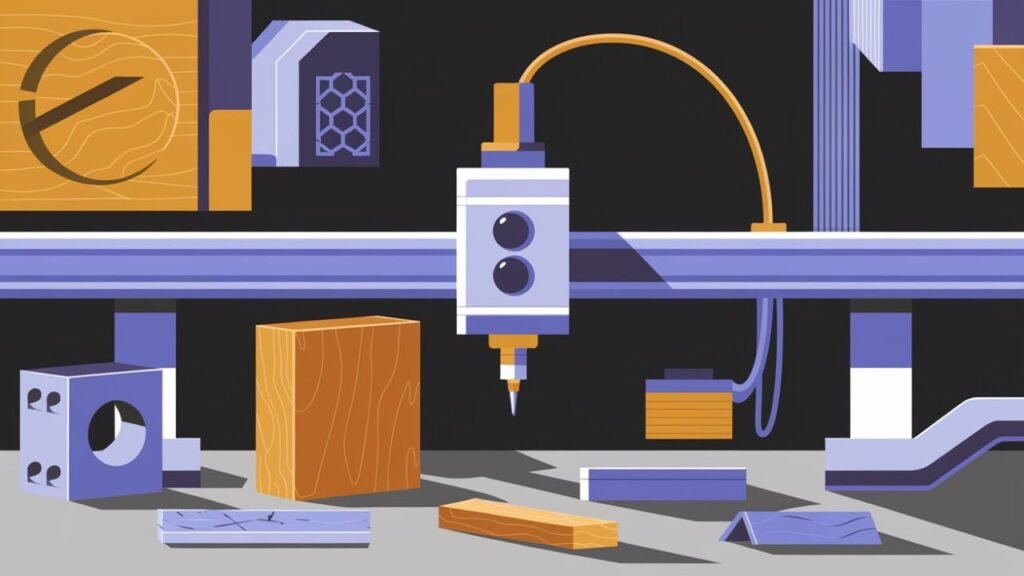
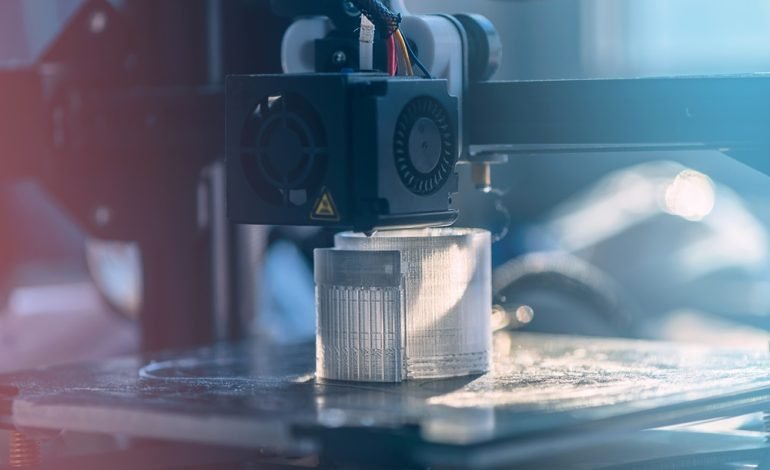
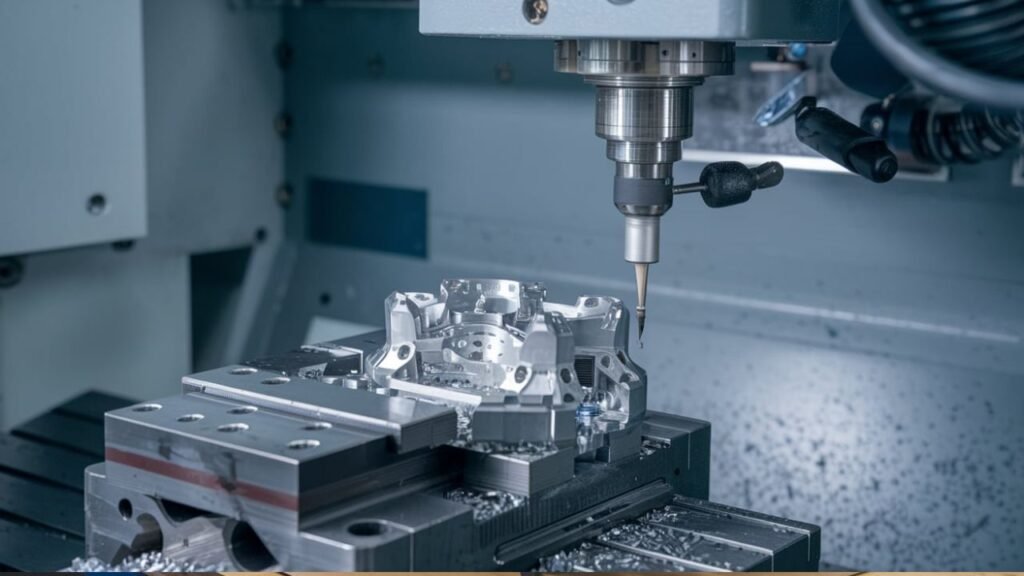
CNC machining sits behind many everyday and high-performance products, from aircraft brackets and surgical instruments to the aluminum housings found on power tools. Despite its widespread use, buyers often misunderstand what the process can realistically achieve, why quotes differ for the same part, and which machine is truly needed. A clearer view of the workflow helps teams make better manufacturing decisions.
At its core, CNC machining is a subtractive process. A computer-controlled machine removes material from a solid block, bar, or plate using rotating cutters until the final geometry matches a digital design. CNC stands for computer numerical control, meaning tool paths are driven by programmed coordinates, usually G-code generated from CAD data. This allows complex shapes to be produced accurately and repeatedly.
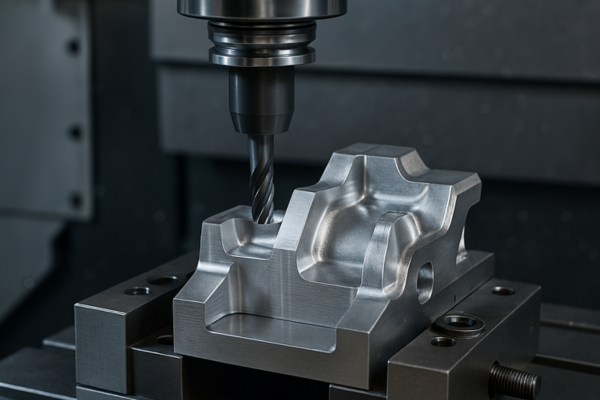
Most shops follow a similar production sequence, but reliability depends heavily on design review and setup. Many parts that fail inspection trace back to a design feature nobody questioned or a setup datum picked up from the wrong face. A well-prepared file, correct fixturing, and clear reference points are essential before cutting begins.
Milling and turning represent the main machine categories. A milling machine holds the workpiece still while a rotating cutter moves across it, producing flat faces, pockets, slots, holes, and complex 3D contours. A 3-axis mill moves the tool in X, Y, and Z. A 4-axis machine adds rotation around one axis, while a 5-axis mill adds two rotational axes so the tool can reach nearly any face in a single setup.
A lathe works differently. It spins the workpiece while a stationary cutting tool shapes it. Turning is the efficient choice for round parts such as shafts, pins, bushings, and fittings. Live tooling on modern lathes adds small milled features such as flats and cross holes, reducing the need for secondary operations.
Material choice affects far more than strength. Aluminum 6061 is the most common choice because it balances machinability, strength, and cost. Stainless steel, carbon and alloy steel, brass, copper, and titanium follow, each selected for strength, corrosion resistance, conductivity, or weight. On the plastics side, acetal, nylon, PEEK, polycarbonate, and ABS cover most applications. Material choice drives machine time, tool wear, available finishes, and the tolerance a part can hold.
Tolerances and finishes should be specified only where function requires them. A standard default tolerance is often around ±0.125 mm, or ±0.005 inch, for dimensions without a specific callout. Precision CNC machining can reach tighter values, but they cost more because they require slower finishing passes, more careful fixturing, and additional inspection. A standard as-machined surface is around Ra 3.2 micrometers, with visible tool marks. From there, parts can be bead blasted, anodized, plated, powder coated, or polished depending on the operating environment and appearance requirements.
CNC machined parts appear wherever accuracy, material performance, or low volumes rule out other processes. They are common in aerospace, medical, automotive, electronics, robotics, and industrial equipment. Each sector brings its own documentation and certification expectations, which is why suppliers usually list the industries they serve alongside their capabilities.
CNC machining is often the right choice when a part needs tight tolerances, real engineering materials, and low to medium volume. Injection molding takes over when quantities climb into the thousands and tooling cost can be spread across the run. For custom projects that need to scale from prototype to production, a supplier able to support both stages avoids requalifying parts at the transition.
When comparing CNC machining services, the quality of a machined part depends as much on the shop as on the machine. Look for clear process control, suitable equipment, material knowledge, inspection methods, documentation support, and responsive communication. For precision components, a design review before releasing a drawing can reduce risk. XC Machining supports such projects from early prototyping through production-ready parts.
Lead times vary. Simple parts can be machined and shipped within a few days, while complex parts, tight tolerances, added finishing, and extra inspection may extend the timeline to one to three weeks. Quantity, material availability, and machine scheduling also affect delivery. Because no dedicated tooling is required, CNC machining is one of the most economical ways to produce single prototypes and small batches, though programming and setup time dominate the cost. For a quote, a STEP file for the 3D geometry plus a PDF drawing for tolerances, threads, finishes, and material is the most universally compatible option, while IGES, Parasolid, and native CAD files are often accepted as well.