When comparing 6061 and 6063 aluminum, the choice usually comes down to function versus appearance. 6061 is the stronger structural alloy, while 6063 is the smoother architectural alloy. Both belong to the 6000 series and rely on magnesium and silicon, but 6061 contains more alloying elements plus a small copper addition. That chemistry raises hardness and load capacity, while 6063’s leaner composition makes it easier to extrude and more attractive after anodizing.
In T6 conditions, 6061-T6 reaches about 276 MPa, or 40,000 psi, in yield strength, compared with roughly 214 MPa, or 31,000 psi, for 6063-T6. That makes 6061 about 30% stronger under yield loading, so it is commonly specified for brackets, mounts, housings, fixtures, and other load-bearing machined parts. Their stiffness is very similar, so if deflection is the main concern, the alloys behave almost alike. The real separation appears when parts must resist permanent deformation under static or structural loads. Published T6 values can vary slightly by supplier and product form.
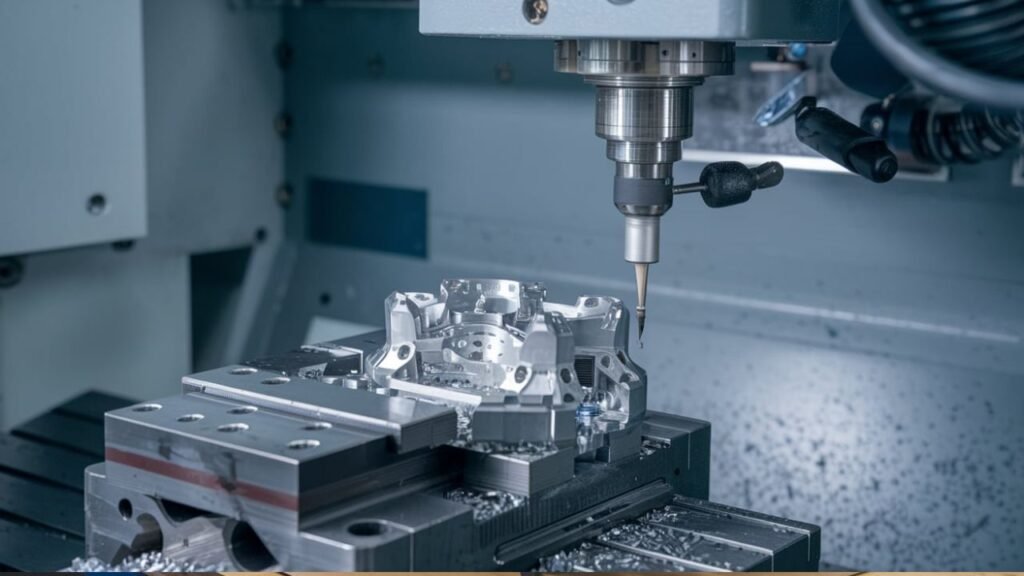
From a machining perspective, 6061 is often the more predictable choice. Its greater hardness helps chips break cleanly, producing a tighter as-machined surface with less tuning. 6063 is softer and can smear or create stringy chips, especially on thin walls, small features, or delicate geometry. Both materials can be CNC machined successfully, and both can hold precision tolerances when feeds, speeds, tooling, and workholding are optimized. At XC Machining, both grades can hold tolerances down to ±0.005 mm on precision CNC milling and turning centers, though 6061 usually gives a more repeatable result for fully machined components.
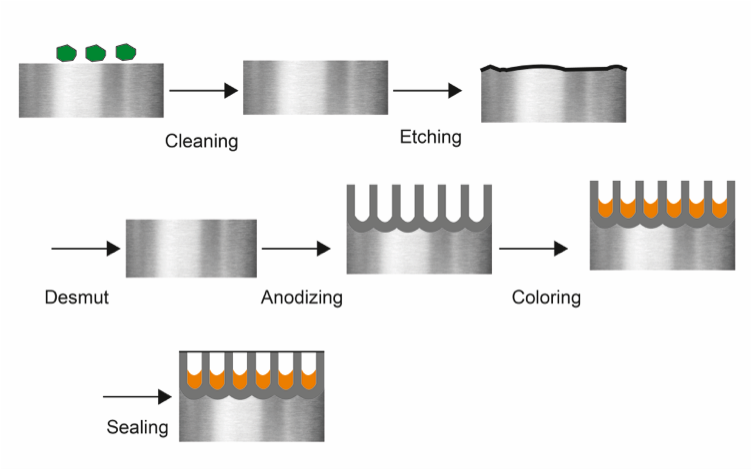
6063 becomes the preferred alloy when surface quality is the priority. Because its chemistry is simpler, it forms a clearer, more uniform anodized layer than 6061. This is why 6063 dominates visible extrusions, architectural trim, consumer housings, and parts where a bright or evenly dyed finish matters. It is also common for heat sinks because extrusion allows thin, complex fin profiles with good thermal conductivity; 6061 may be selected when a machined heat-sink base needs higher strength. 6061 can still anodize well, especially with bead blasting to reduce minor machining marks, but it may show more color variation across large or matched surfaces. Remember that anodizing adds oxide and can change dimensions, so check anodizing dimensional change before releasing final drawings.
Material availability also shapes the decision. 6061 is widely stocked as plate, bar, rod, and sheet, making it practical for parts machined from solid stock. 6063 is mainly supplied as extruded profiles, so it is economical when the design already starts as a constant cross-section shape. Pound-for-pound raw costs are similar, but fully machined parts from solid 6063 can be more expensive because thick stock is harder to obtain. For most machined blocks and plates, 6061 is both stronger and easier to source.
Corrosion resistance is another area where the two alloys are closely related. Both provide the dependable performance expected from 6000-series aluminum, and anodizing improves protection further. 6063 may offer a slight advantage in some architectural or marine environments, but the difference is usually not decisive for general industrial use.
A practical selection rule is simple: choose 6061 for structural parts, tight machined features, solid stock, and maximum yield strength. Choose 6063 for extruded parts, cosmetic anodized surfaces, complex constant profiles, and designs where appearance leads. If you are balancing durability against higher-strength options, compare 6061 with 7075 aluminum; if your part will be CNC machined to tight tolerances, confirm the final alloy early to avoid costly redesigns around strength, finish, or stock availability.