Choosing between a bolt and a screw can feel surprisingly tricky. Many people hesitate at the toolbox, trying to decide which fastener will keep a project sturdy and secure. The right choice matters: one option can produce a rock-solid connection, while the other may lead to loosening, stripped threads, or even structural failure. Let’s break down the differences and help you make confident decisions.
At their core, bolts and screws work in different ways. A bolt is designed to be used with a nut, which means it is tightened from both ends and creates a strong clamping force. A screw, on the other hand, is driven directly into the material it is fastening. It either cuts its own threads or fits into pre-existing internal threads within the workpiece. Knowing this basic distinction is the foundation of proper fastener selection.
The threaded shank is where much of the action happens. Threads are the spiral ridges that allow a fastener to grip material or lock into a nut. Coarse threads are quick to install and work well in softer materials, but they can strip more easily. Fine threads provide more precise tension and hold better in harder materials. Choosing the wrong thread pattern can lead to a joint that fails under pressure or becomes impossible to tighten safely.
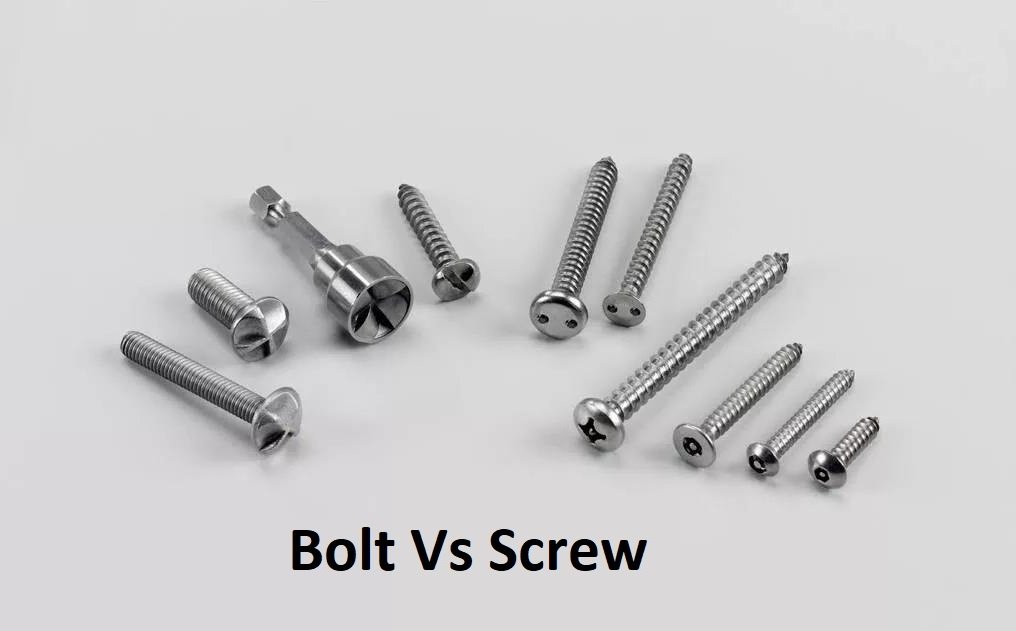
Another key difference lies in the tools used. Bolts are typically held in place while a wrench or socket tightens the nut. Screws are driven with a screwdriver or drill bit, biting into the material as they turn. Over-tightening either fastener can damage the threads, so it is always wise to follow manufacturer torque recommendations and avoid forcing anything that does not turn smoothly.
The anatomy of a bolt is built around nut-and-washer assembly. The head is the part a wrench grips, with styles ranging from hex and carriage to flange heads. The grip is the smooth, unthreaded section just below the head. This area allows the bolt to align parts accurately and reduces wear on clamped surfaces. At the bottom, the threaded portion engages with the nut to produce tension. Fine-thread bolts offer better control, while coarse-thread versions install faster and often resist fatigue better in certain applications.
Screws have a simpler, self-contained design. The head determines which driver bit you need, such as Phillips, flat, or Torx. Some heads sit flush with the surface, like countersunk styles, while others remain exposed. Screw threads vary by purpose: wood screws feature sharp, wide threads that cut into timber, while metal screws often have finer threads for better grip in harder materials. The pointed tip helps the screw start cleanly, and self-tapping versions can even form their own threads in softer metals.
Choosing between these two fasteners depends on how much stress the joint will face and whether you may need to disassemble it later. If you are working on structural beams, automotive parts, or other heavy-duty projects, a bolted connection with a nut and washers is usually the safer route. For woodworking, drywall, cabinetry, decking, or other direct fastening tasks, a screw is often more convenient and just as effective. Think about the environment too: outdoor installations may require galvanized, stainless, or coated fasteners to resist moisture and rust.
Material choice is another major factor. Steel bolts and screws are common, but they range from mild grades to hardened or stainless versions. High-grade fasteners carry markings on the head, such as 5, 8, or 10.9, which indicate their strength. Brass and aluminum work well for lighter loads or decorative applications, while marine environments demand saltwater-resistant coatings or special alloys. Using a low-grade fastener in a high-stress setting is risky and can lead to shearing or sudden failure.
Thread standards also deserve attention. In the United States, you will commonly encounter coarse (UNC) and fine (UNF) threads, while metric sizes like M6 or M8 are standard internationally. Wood screws have wide, aggressive threads designed to grip fibers, whereas drywall screws use deep, sharp threads for sheetrock. If you are fastening metal to metal, a machine screw may need a pre-tapped hole, while a self-tapping screw can create its own path. Never mix metric and imperial threads; doing so can result in stripped threads, jammed fasteners, or damaged holes.
Avoiding common mistakes will save you time and frustration. If a fastener feels loose or sloppy as you thread it, stop immediately and check the size and thread type. Forcing it can cross-thread the assembly and ruin both the fastener and the material. Also think about future disassembly: if you plan to open the joint regularly, bolts are often a better choice because screws can wear out the hole in wood after repeated use. Applying a small amount of lubricant or anti-seize compound can help in high-temperature settings or when dealing with tight fits.
Fasteners can also be reused as long as they remain in good condition. Inspect them for rust, bent shanks, or stripped heads before reinstalling. High-grade bolts generally survive multiple cycles better than softer screws. Many fasteners are steel-based and recyclable, so at the end of a project, sort and recycle old hardware where possible. Keep bolts and screws clean and dry to extend their life and preserve their recyclability.
In the end, the bolt vs screw decision comes down to the demands of your project. Reaching for a bolt means you need serious clamping power and a nut-and-washer setup. Reaching for a screw means you want quick, direct installation into the material itself. By matching the fastener to the load, environment, and future maintenance needs, you’ll create connections that are safe, durable, and built to last.