Metal fabrication is no longer just cutting, bending, and welding a sheet of steel. Today, it is a blend of digital design, precision machinery, and intelligent production systems that allow factories to make stronger parts with less waste and shorter lead times. For companies creating custom metal components, the challenge is often balancing speed, accuracy, and cost. The good news is that modern fabrication technologies are becoming more capable, more flexible, and more affordable every year.
As manufacturers prepare for 2025, the biggest gains are coming from methods that combine automation, additive processes, and smarter material handling. These advances are not limited to large industrial plants. Small shops, startups, and engineering teams can also benefit when they select the right tools for the job. The result is a production environment where complex parts move from concept to finished product with fewer steps and less risk.
At its core, metal fabrication involves shaping, joining, cutting, and forming materials such as steel, aluminum, titanium, and specialty alloys. The process may produce tiny brackets, automotive panels, aircraft components, structural frames, or consumer hardware. Because each industry has different requirements, no single technology works for every application. Instead, manufacturers choose methods based on part geometry, material type, production volume, tolerance needs, and budget.
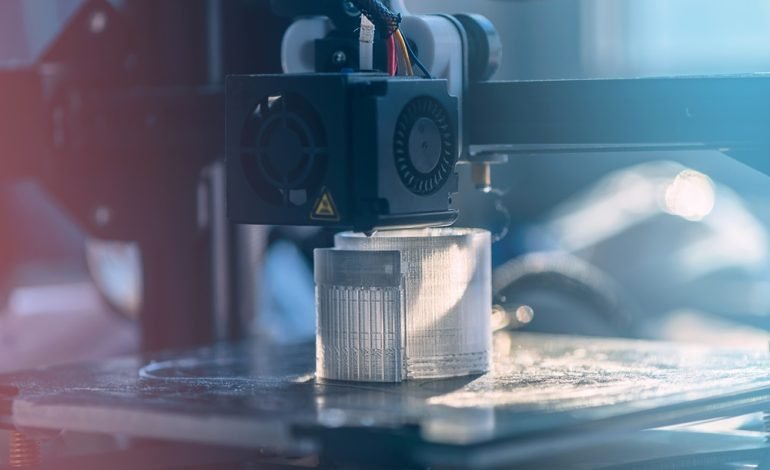
One of the most transformative developments is metal 3D printing. Unlike subtractive methods that remove material from a solid block, additive manufacturing builds a part layer by layer from metal powder or wire. This approach makes it possible to create internal channels, lattice structures, organic shapes, and lightweight assemblies that would be difficult or impossible to machine conventionally. In aerospace, automotive, medical, and energy sectors, the ability to reduce weight while maintaining strength is especially valuable. In 2025, metal additive manufacturing is expected to become more reliable for prototyping and low-volume production, helping teams test designs faster before committing to expensive tooling.
Automation and robotics are also reshaping sheet metal fabrication. Traditional production often relies on skilled operators for repetitive tasks, but modern robotic cells can handle welding, cutting, material loading, and assembly with consistent precision. Robots do not get tired, and they can maintain tight tolerances across long production runs. When paired with AI-driven vision systems, they can detect defects, adjust parameters in real time, and reduce scrap. For factories aiming to improve throughput and safety, automation is becoming a practical way to stay competitive without expanding labor costs.
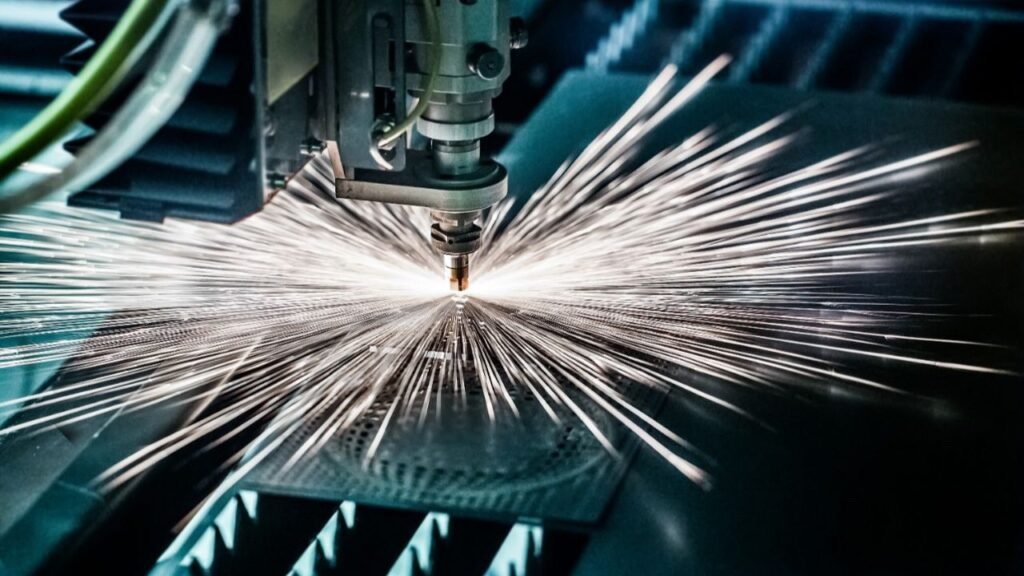
Laser cutting remains one of the most widely used precision methods. A focused beam melts, burns, or vaporizes metal, producing clean edges with minimal material loss. It is especially effective for thin to medium sheets, intricate contours, and parts that require tight dimensional control. By 2025, laser systems are expected to deliver faster cutting speeds, better nesting software, and more intelligent power adjustment. These improvements make laser cutting a strong choice for manufacturers that need both accuracy and repeatability.
Waterjet cutting offers a different advantage. Instead of heat, it uses high-pressure water mixed with abrasive particles to slice through metal, composites, and other materials. Because the process does not create a heat-affected zone, parts are less likely to warp, harden, or change properties near the cut line. This makes waterjet cutting useful for delicate alloys, thick plates, and components where structural integrity is critical. In 2025, more precise controls and improved nozzle technology should make waterjet systems faster and more versatile, particularly in aerospace and automotive applications.
Plasma cutting is valued for its speed and power. It uses ionized gas to melt and sever electrically conductive metals such as steel, aluminum, and copper. While it may not match laser cutting for very fine detail, plasma systems are excellent for larger sheets, thick materials, and high-output environments where cutting speed matters. Modern plasma technology is becoming more energy-efficient and accurate, with improved consumables and automation reducing downtime. For workshops that process heavy plate or need rapid rough cuts, plasma remains a dependable option.
Metal stamping continues to support large-scale production of flat parts. In this process, a sheet is placed into a die and pressed into a specific shape, making it ideal for brackets, panels, enclosures, and components that require repeatable geometry. Stamping is especially useful when volumes are high and consistency is essential. As tooling, sensors, and automated presses improve, stamping operations can achieve faster cycles, lower defect rates, and tighter tolerances, making them more competitive for modern manufacturing.
Welding remains a foundational technique for joining metal parts into durable assemblies. MIG, TIG, and stick welding each have strengths depending on material, thickness, and finish requirements. In 2025, automated welding is likely to expand beyond simple repetitive joints into smarter systems that monitor heat input, adjust travel speed, and maintain consistent weld quality. This can reduce rework, improve structural performance, and allow manufacturers to produce complex assemblies more efficiently.
The future of metal fabrication will be shaped by convergence. Rather than relying on one process, manufacturers are increasingly combining technologies to get the best result. A part may be printed to create a complex core, laser-cut for clean edges, stamped for flat sections, and welded into a final assembly. Hybrid fabrication allows businesses to balance design freedom, strength, cost, and production speed. This flexibility is becoming more important as customers expect shorter development cycles and more customized products.
Sustainability is another major driver. Advanced fabrication methods help reduce scrap, lower energy consumption, and make better use of raw materials. Additive manufacturing can use only the material required for a part, while high-precision cutting reduces excess waste. Recycling and improved process control also support greener production. In 2025, sustainability is not just a marketing consideration; it is becoming a practical factor in technology selection, especially when clients demand efficient, responsible manufacturing.
Choosing the right metal fabrication technology requires a clear evaluation of the job. Companies should consider part complexity, material type, required tolerances, production volume, finishing needs, equipment access, and total cost. A prototype with complex geometry may benefit from metal 3D printing, while a high-volume panel may be better suited to stamping or laser cutting. Thick plate work may favor plasma or waterjet, depending on precision and heat sensitivity. The best choice is the method that meets quality goals without adding unnecessary expense.
Looking ahead, metal fabrication technologies will continue to make production faster, smarter, and more adaptable. Businesses that adopt the right mix of automation, precision cutting, additive manufacturing, and sustainable practices can improve efficiency, reduce lead times, and unlock new design possibilities. In a competitive market, the ability to produce accurate parts quickly is no longer a luxury. It is a core advantage.