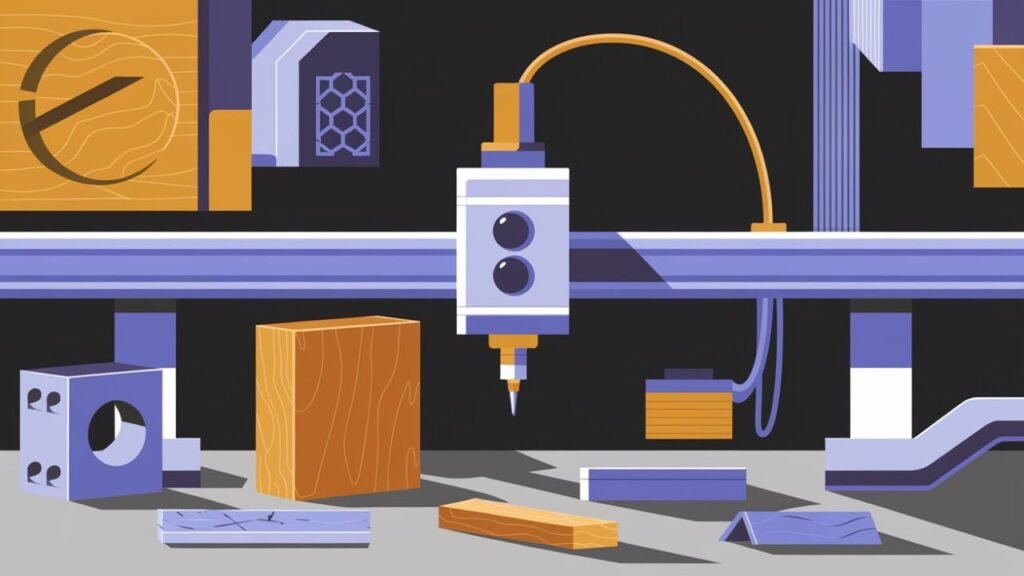
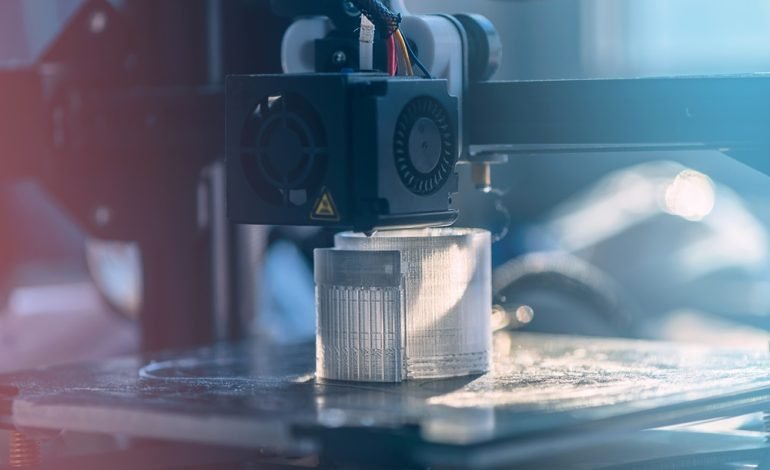
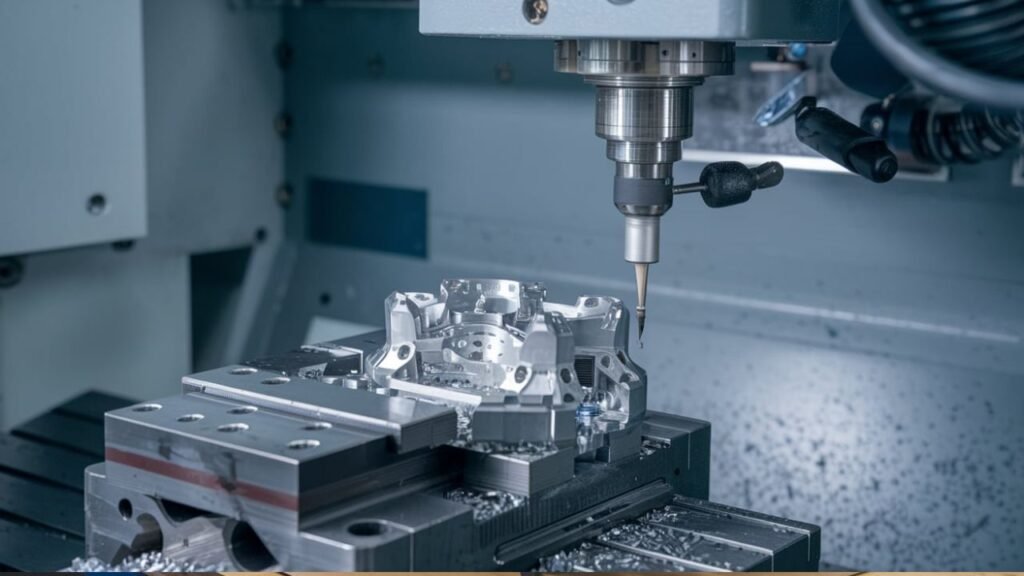
When a manufacturer needs to turn a detailed CAD model into a physical component, the decision often comes down to two precision routes: CNC machining and electrical discharge machining. Both can produce high-quality parts, but they solve different problems. The right choice depends on geometry, material, batch size, tolerance, and overall project cost.
CNC machining uses computer-controlled cutting tools to remove material from a workpiece. A 3D design is translated into machine instructions, and lathes, mills, or multi-axis centers follow those paths with tight repeatability. Because the process is fast and repeatable, it is well suited to automotive, aerospace, electronics, and high-volume production where consistent dimensions are essential.
EDM takes a different approach. Instead of relying on mechanical force, it uses controlled electrical discharges to erode conductive metal. This allows manufacturers to create sharp corners, deep cavities, thin walls, and complex contours that may be difficult or impossible to reach with a cutting tool. It is especially valuable when working with hardened steel, superalloys, or other tough materials.
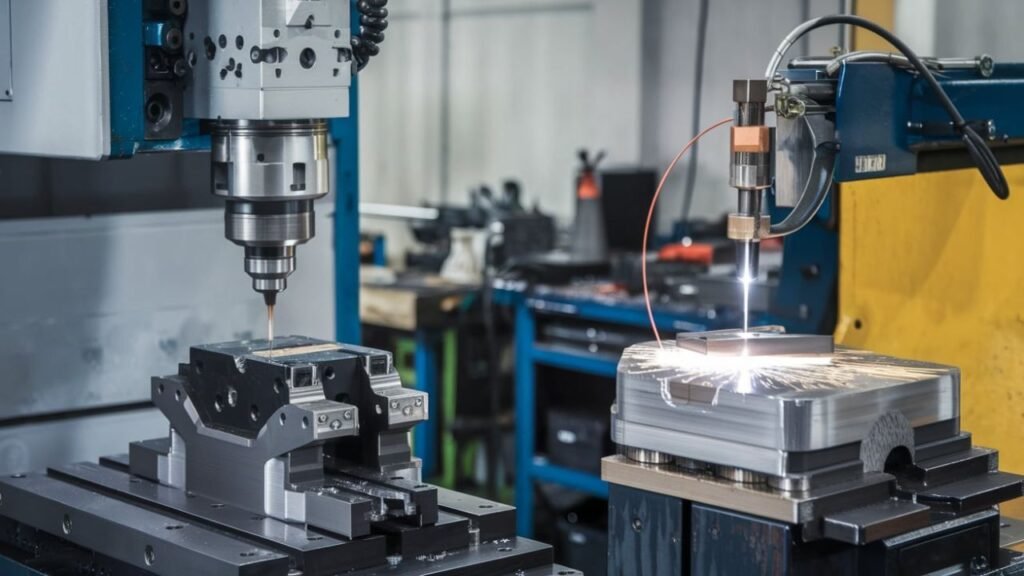
Material compatibility is a major deciding factor. CNC can process a broad range of metals, plastics, and composites, but very hard or heat-resistant materials can wear tools quickly. EDM is limited mainly to electrically conductive materials, yet it can handle those materials with less tool wear and higher geometric complexity.
Surface quality also differs. CNC finishes depend on tool path, feed rate, cutting speed, and post-processing. EDM can produce very smooth surfaces in some applications, but it may leave a recast layer or micro-roughness that requires deburring or polishing. The final finish should be judged against the part’s functional and aesthetic requirements.
Production volume changes the economics. CNC is usually more efficient for large batches of standard components because setup can be amortized and machines can run continuously with minimal supervision. EDM often makes more sense for small batches, prototypes, molds, dies, or one-off parts where intricate detail outweighs slower material removal.
Cost is not just the hourly rate. Consider setup time, tooling, material, cycle time, post-machining, scrap, and the skill required to program the job. A CNC part may be cheaper per unit at scale, while an EDM part may be the only practical option for a complex feature.
For prototyping, both methods are useful. CNC can quickly produce functional models for fit and form checks, while EDM can validate difficult-to-machine geometries or produce high-detail molds. Using the right process early can reduce rework before full production begins.
Looking ahead, software, automation, and material science are improving both technologies. Advanced simulation, adaptive control, and integrated inspection are helping manufacturers reduce errors and shorten lead times. At the same time, sustainable manufacturing is pushing both methods toward less waste, lower energy use, and more efficient material removal.
In practice, CNC is often the default for fast, repeatable production of parts with accessible features, while EDM is the specialist for hard, conductive materials and complex internal shapes. Evaluating the design, material, quantity, tolerance, and budget will help select the process that delivers the best balance of quality, speed, and cost.
When speed is the priority, CNC usually wins, especially for softer materials and larger runs. When precision for intricate details or hardened material is the priority, EDM may be the better fit.