Product development has long been slowed by prototyping constraints. Traditionally, creating a model meant sourcing different materials, producing individual components, and assembling them by hand—a process that consumes both time and money. Multi-material 3D printing removes many of those obstacles. It allows objects to be fabricated using multiple substances in one operation, enabling prototypes that are stronger, more versatile, and more expressive.
At its core, this technology is about layering different materials into a single build. Each layer can be thought of as an ingredient in a sandwich: one might be a rigid plastic, another a soft rubber-like polymer, yet another a metal. Rather than molding parts separately and joining them afterward, the printer creates the entire object as a continuous piece. The result is a component that has distinct zones—hard where needed, flexible where necessary—fabricated in one go.
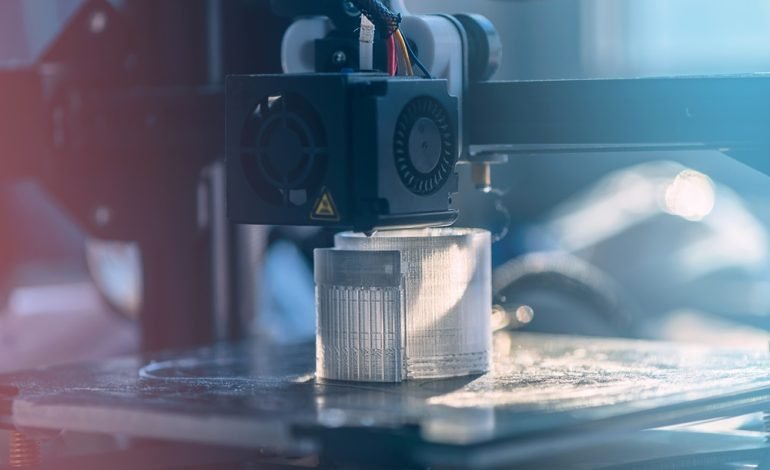
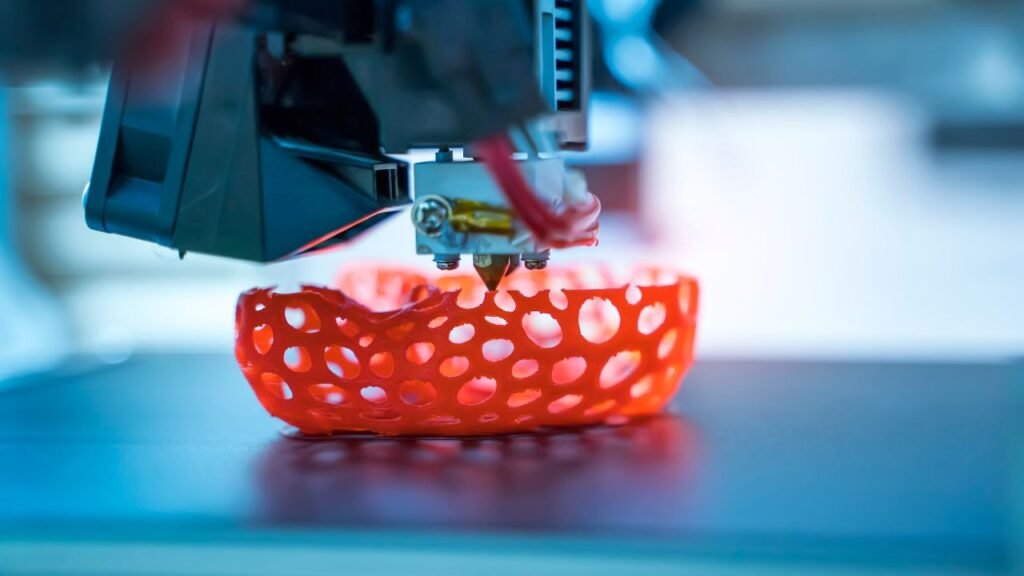
Understanding the mechanics behind this requires looking at how standard printing differs. A conventional 3D printer extrudes a single filament layer by layer until the object is complete. A multi-material system uses multiple nozzles or specialized print heads, each loaded with a different substance. During the build, the printer switches among materials according to the design, depositing them exactly where they are required. This makes it possible to produce objects with integrated hinges, overmolded grips, embedded electronics, or components that combine strength with elasticity. A single prototype can therefore behave like an assembled product even though it was never assembled.
The impact on workflow is significant. Designers no longer need to wait for separate parts or allocate labor to assembly. They can test more complex ideas quickly and refine iterations in hours, not weeks. Since bonds form during the printing process, the resulting part often proves more durable than one held together with adhesives or fasteners. This leads to more reliable testing and a smoother transition from concept to production.
Different sectors are already taking notice. In automotive and aerospace, engineers use multi-material printing to create lightweight but robust components for dashboard panels and interior fixtures. Healthcare teams print patient-specific models and surgical guides using soft and hard materials together, making procedures easier to plan. Consumer electronics companies rely on the technology to craft enclosures with flexible sealing areas or integrated grips, reducing part counts and simplifying supply chains.
Designing for these machines, however, is not the same as preparing a standard 3D model. It demands attention to how materials will interact, whether they will adhere properly, and how the printer should sequence them. Designers must consider part orientation, support structures, and the boundary between materials. With careful planning, this adds a layer of creative freedom—allowing for innovative geometries that would be impossible to assemble from separate components.
Challenges exist as well. The equipment can be costly, and not every material pairs well with every other. Post-processing may be more complex, and there is a learning curve before teams can take full advantage of the machine's capabilities. Still, for most applications, the gains in speed, precision, and product performance outweigh these limitations.
Prototyping is where the technology makes its most immediate difference. Conventional methods often require printing parts individually, then waiting for assembly. With multi-material printing, the complete prototype emerges from the printer in a single session. This provides a more realistic sense of the final product's look, feel, and function, and allows teams to test a variety of material combinations before committing to mass production.
Material selection remains critical to success. Teams should weigh mechanical strength, flexibility, temperature resistance, and surface finish before starting the print. Choosing the right combination can lower costs and ensure the finished item performs exactly as intended. It can also open new possibilities for customization, letting designers tailor specific sections of a product for particular users or use cases.
Real-world applications illustrate the versatility. Medical device makers are producing implants and instruments that require both rigidity and soft external layers. Automotive teams are prototyping gaskets and seals that need resilient yet flexible edges. Electronics companies are building casings with integrated shock absorption, while consumer goods brands explore personalized ergonomic handles and grips. These examples show that the technology is not just a laboratory experiment; it is a practical tool for manufacturing.
Sustainability also benefits. Because parts are produced on-demand, manufacturers can avoid large inventories and reduce unused materials. Energy consumption tends to decrease as well, since fewer machines and assembly steps are involved. With global pressure to lower environmental impact, this makes the technology an attractive option for responsible production.
Looking ahead, the potential is expanding. Improved printers will handle more diverse materials, including composites and high-performance polymers, with greater precision. Software will make multi-material workflows easier, and costs are likely to fall as adoption grows. These advances will place the technology in reach of more companies, further embedding it into daily design practice.
Initial investment in a multi-material printer may be significant, but the long-term economics are often favorable. Time saved during development, reductions in waste, and greater product quality all contribute to a strong return on investment. For companies focused on rapid innovation, the technology offers a competitive edge.
Common questions often arise. How does it work in practice? A machine deposits different substances layer by layer through multiple nozzles, allowing plastics, metals, and in some cases ceramics or composites to coexist in a single part. Can metal and plastic be printed together? Advanced machines can, and this is especially useful in sectors that need both structural strength and flexibility. Which industries benefit most? Automotive, aerospace, healthcare, and consumer electronics lead the way, using the approach for complex prototypes, end-use parts, and tailored components.
Ultimately, multi-material 3D printing represents a shift in how products are conceived. It shortens the distance between idea and object, reduces waste, and supports a level of complexity that traditional manufacturing struggles to match. As the technology grows, product teams that adopt it now will be well placed to shape the products of tomorrow.